
Saturday, 24th of January
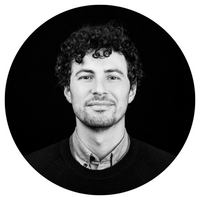
Ludovico Lami
Assistant Professor, Scuola Normale Superiore (Pisa, Italy)
Quantum Hypothesis Testing
Ludovico Lami is an Assistant Professor at the Scuola Normale Superiore, Pisa, Italy. He received his PhD from UAB (Barcelona, Spain) under the supervision of Andreas Winter. From 2022 to 2024, he was an Assistant Professor at the University of Amsterdam and QuSoft. His research, for which he received an ERC Starting Grant, focuses on quantum Shannon theory and entanglement theory.
Ludovico Lami will take you on a tour of quantum hypothesis testing, from the basic ideas to how quantities like the relative entropy and the Rényi divergences naturally emerge through the quantum Stein’s lemma and the quantum Chernoff bound. In the second part, he will move on to more advanced topics such as composite hypothesis testing. Along the way, the tutorial will highlight how hypothesis testing underpins many central tasks in quantum information. The tutorial assumes only basic familiarity with density matrices and quantum measurements.
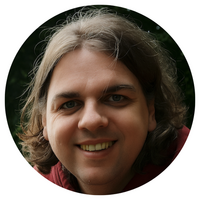
André Chailloux
Permanent Researcher, Inria de Paris
Algorithmic Applications of Regev’s Reduction
André Chailloux is a researcher at Inria Paris, working on quantum computing and post-quantum cryptography. His current focus is on quantum algorithms for problems used in post-quantum cryptography, particularly code-based and lattice-based problems.
Originating from the work of Chen, Liu, and Zhandry, a new family of quantum algorithms inspired by Regev’s reduction has been developed for lattice-based problems in post-quantum cryptography. These quantum algorithms are also at the heart of the Decoded Quantum Interferometry framework. In this tutorial, André Chailloux will present this family of quantum algorithms, the state of the art and recent developments, with a focus on applications to code-based problems and optimization problems.
Sunday, 25th of January

Thomas Schuster
Sherman Fairchild Postdoctoral Scholar, California Institute of Technology
Designs and pseudorandom unitaries
Thomas Schuster’s research lies at the interface of quantum information science and quantum many-body physics. His work focuses on quantum technologies and their potential applications. He is currently a Sherman Fairchild Postdoctoral Scholar at the California Institute of Technology and a Visiting Researcher at Google Quantum AI. He received his Ph.D. in Physics from the University of California, Berkeley, where he worked with Professor Norman Y. Yao.
When can quantum systems look completely random - and what does this reveal about quantum computing and physics? This tutorial examines these questions through the lens of unitary designs and pseudorandom unitaries. Thomas Schuster will survey the surprising behaviors and applications that have made random unitaries a cornerstone of quantum information science, and explore recent discoveries on their complexity and emergence.
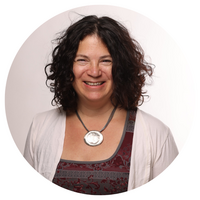
Dorit Aharonov
Professor, School of engineering and computer science, Hebrew university of Jerusalem, & co-founder and chief scientist, Qedma quantum computing
Error Mitigation
Dorit Aharonov is a professor of computer science at the Hebrew University of Jerusalem and co-founder and CSO of QEDMA Quantum Computing. She co-proved the quantum fault-tolerance theorem and has made pioneering contributions in quantum algorithms, Hamiltonian complexity, and quantum cryptography. Aharonov is a recipient of the 2006 Krill prize and the 2014 Bruno award, and in 2024 she was elected to the U.S. National Academy of Sciences.
Noise and errors remain the main barrier to practical quantum computation. While recent demonstrations of small-scale fault-tolerant computations validate the long-term promise of error correction, the large qubit overheads and limited qubit counts in current devices delay its practical impact. Error mitigation is an approach to quantum error reduction that trades qubit overhead for additional quantum processing time, enabling larger circuits on today’s hardware. It has thus become the leading strategy toward near term quantum advantage.
This tutorial will survey major error mitigation methods, including probabilistic error cancellation, zero-noise extrapolation (ZNE) and other advanced methods. Dorit Aharonov will present experimental results on large circuits and, on the other hand, discuss theoretical limits on error mitigation at large scales. Finally she will outline how error mitigation can be combined with error correction in a hybrid manner, to optimize the use of time and qubit resources, accelerate the path to quantum advantage, and provide significant benefits even when full fledged fault tolerant quantum computers are available.